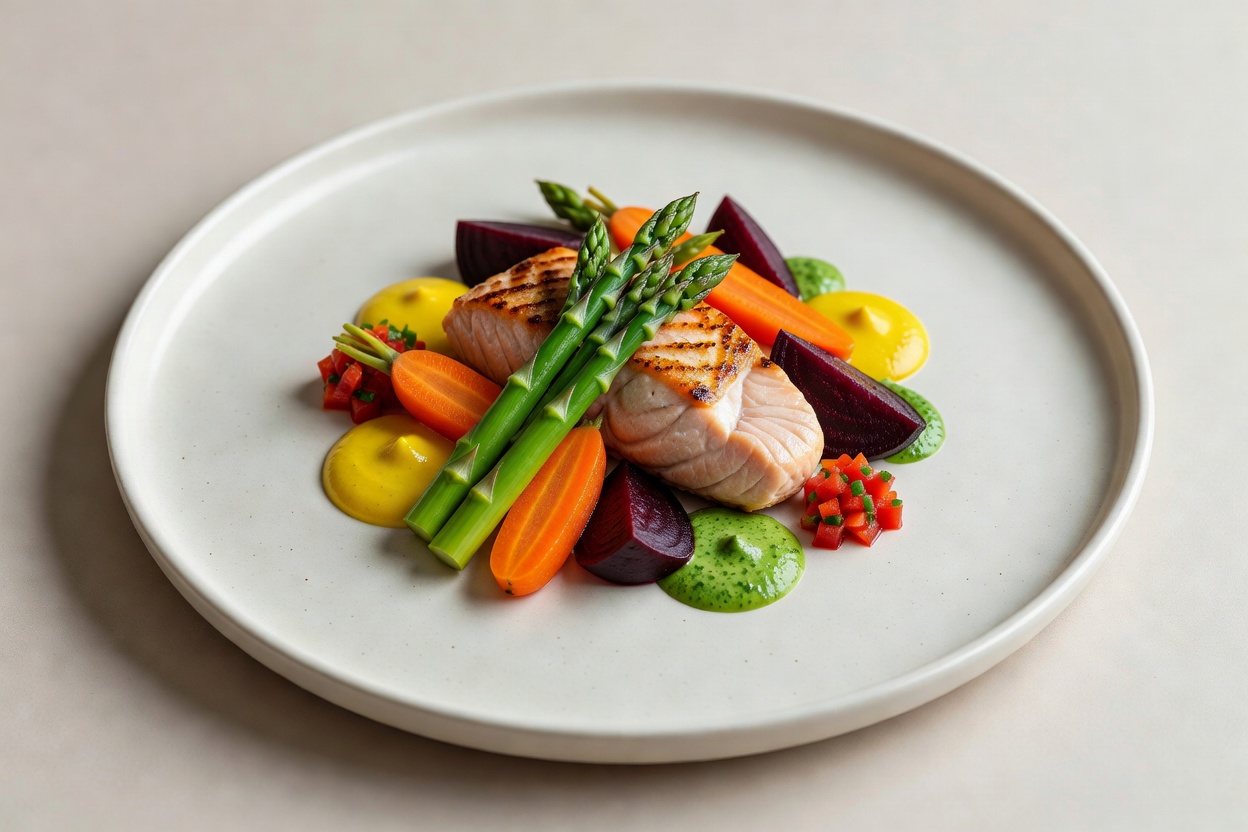
A smokehouse menu is partly a cooking plan and partly a promise about how a guest will feel at the table. It needs to account for the long lead times of some smoked foods, the limits of the equipment and the fact that not everyone wants every bite to taste like the fire. Sounds obvious. It’s remarkable how often the obvious part needs a spreadsheet.
Build a menu with contrasts
Smoked meat may be a focal point, but fish, vegetables and lighter preparations can widen the meal and offer different textures. An ingredient’s suitability depends on the process and the kitchen’s ability to handle it safely. Include fresh, crisp, acidic or herbaceous elements alongside richer dishes; a pickle or bright salad can reset the palate, while grains, bread or roasted vegetables bring another kind of comfort.
Think about smoke intensity across the whole menu. If every component is assertively smoked, the meal can become monotonous. Use a mix of smoked, grilled, fresh and simply dressed elements when that suits the concept. Sauces can be served on the side so guests can choose how much richness or heat to add. A dish should taste coherent before it gets its garnish of extra smoke.
Variety also helps guests with different appetites and preferences. A menu may offer vegetable-forward dishes or options with less pronounced smoke. The kitchen should describe ingredients plainly and make no unsupported dietary or nutritional claims. If a dish contains an allergen or may have come into contact with one, communicate that accurately and follow the appropriate local rules.
Let equipment and time shape the plan
Long cooking times mean that service begins well before opening. Equipment capacity, batch size, fuel, staff availability and storage space determine what can be produced consistently. A smoker loaded to capacity may behave differently from a lightly filled one. Plan realistic batches and leave time for the equipment to stabilise, for food to rest where appropriate and for safe holding or finishing.
Portioning matters. Cuts and vegetables need to suit the intended cook and serving style. Trimming can improve consistency, while preparation such as seasoning should be documented enough for different team members to follow. Resting is not dead time; it can help a dish settle before slicing and service. Finishing—perhaps a brief grill, sauce or fresh garnish—should have a clear purpose rather than becoming a last-minute rescue.
Make food safety part of the workflow
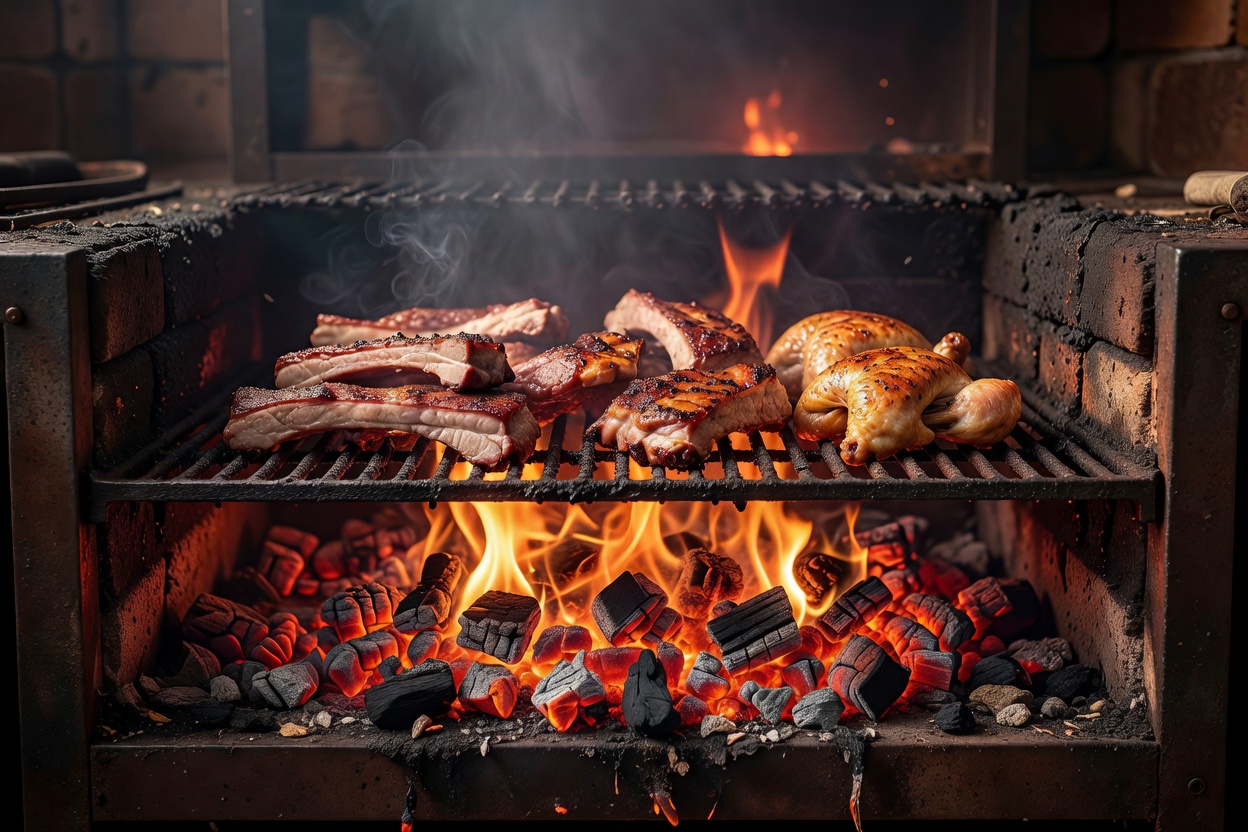
Safe handling should be built into receiving, storage, preparation, cooking, cooling, reheating and service. Keep raw and ready-to-eat foods separated, clean and sanitise food-contact areas appropriately, and manage temperatures using reliable instruments and local food-safety requirements. Follow ingredient-specific cooking and holding guidance. Smoking, curing and low-temperature methods do not automatically make food safe.
For an operation, documented procedures can help a team handle process changes and service pressure. Check how food moves from the smoker to a resting or holding area, and who is responsible for readings. Avoid relying on colour, smell or a single chamber display as proof of safety. If the process changes, review the control steps as well as the flavour.
Service is part of the experience
A beautifully cooked dish can lose its appeal if it arrives cold, late or unexplained. Match the pace of service to the kitchen’s finishing capacity. Share plates encourage conversation; individual portions may help control timing and provide clearer ingredient information. Neither format is inherently better. It depends on the menu and the guest experience the restaurant wants to create.
Staff explanations can make experimental food more approachable. A brief note about whether an ingredient is hot-smoked or finished over wood may help guests choose. Let people know where a sauce sits on the plate, what sides bring contrast and how to ask about allergens or dietary needs. Avoid promising a dish is suitable for a dietary requirement unless the kitchen can verify ingredients and cross-contact controls.
Questions guests can ask
Guests can ask how smoky a dish is, what its main ingredients are, whether a sauce is served separately and whether the kitchen can accommodate a particular allergy or preference. Asking about preparation is reasonable; a team may need to check details rather than answer from memory. For operators, a clear menu and a reliable route for staff to confirm ingredient information are worth the effort.
A thoughtful dining room supports the food without turning into a theme set. Warm light, durable materials and a comfortable level of sound can let guests focus on the meal. The smokehouse atmosphere should feel inviting, not like an exhaust test. In the end, a memorable experience is a balance of well-cooked food, clear communication and service that gives the table room to enjoy it.
For ideas about learning from established foodways, continue to regional barbecue traditions. To understand the cooking variables behind a smoky plate, read the techniques guide.